

MIT Panhellenic
Find your home under the dome
•
Find your home under the dome •
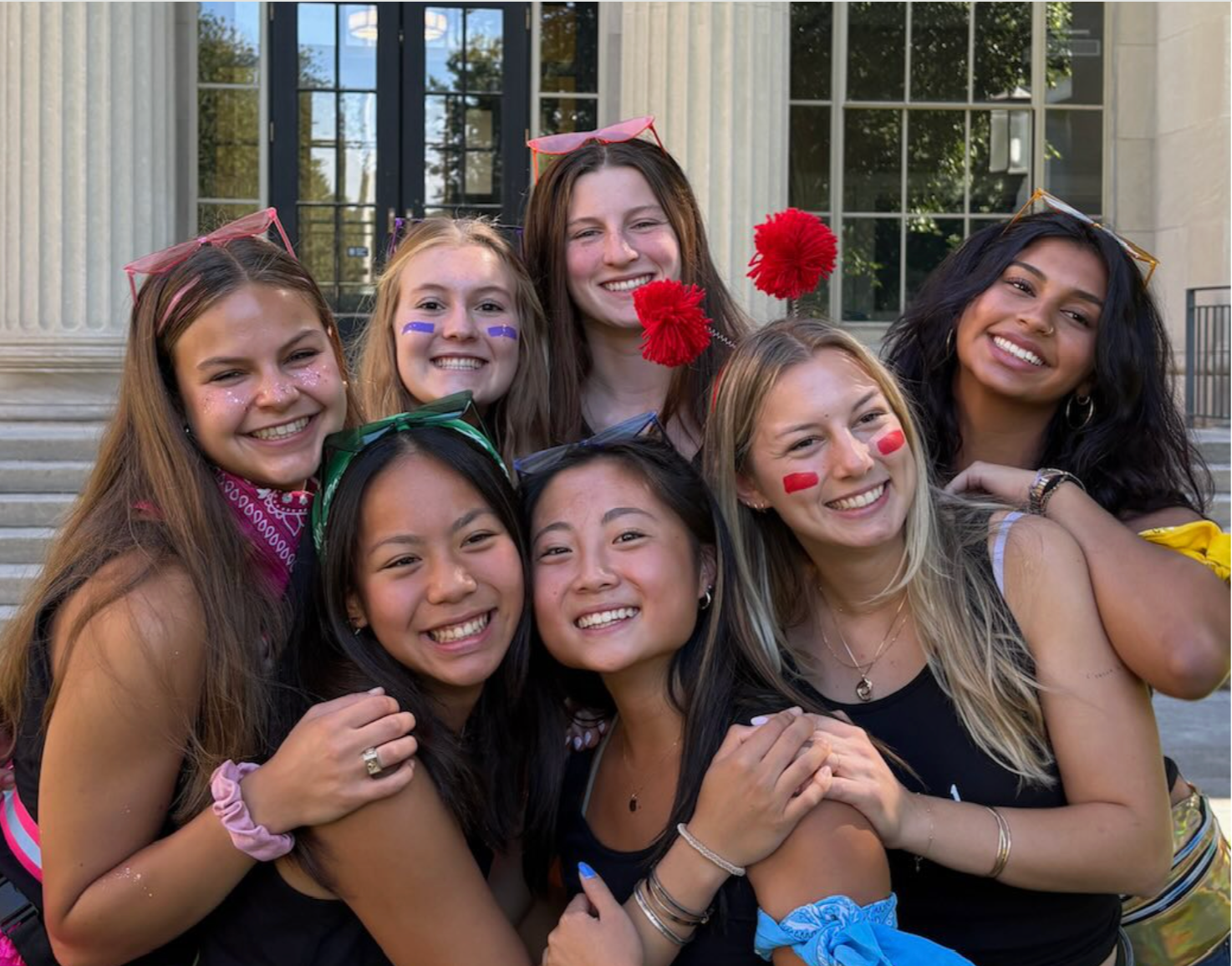
MIT Panhellenic is the largest women's+ community on campus, consisting of over 550 total members across 6 sorority chapters. Committed to embodying a culture of diversity and inclusion, empowerment, and high achievement, the sorority experience at MIT is unlike any other. We provide our members with life-long friendships, academic support, leadership opportunities, alumni connections, and a "home under the dome" through the continuous pursuit of sisterhood, scholarship, service, leadership, integrity, growth, and respect.
Our members maintain high GPAs, publish in top academic journals, participate in the arts and athletics, and are actively involved in student groups such as the Undergraduate Association, Rainbow Lounge, Pleasure, and more. Sorority life provides the opportunity for members to establish bonds with some of the most dedicated, talented, and diverse people on campus — bonds that will truly last a lifetime.
Membership is open to all women+; this is inclusive of cisgender women and transgender women. Nonbinary/agender individuals are also welcomed in our community.

Our Mission, Vision, & Values
-
Mission
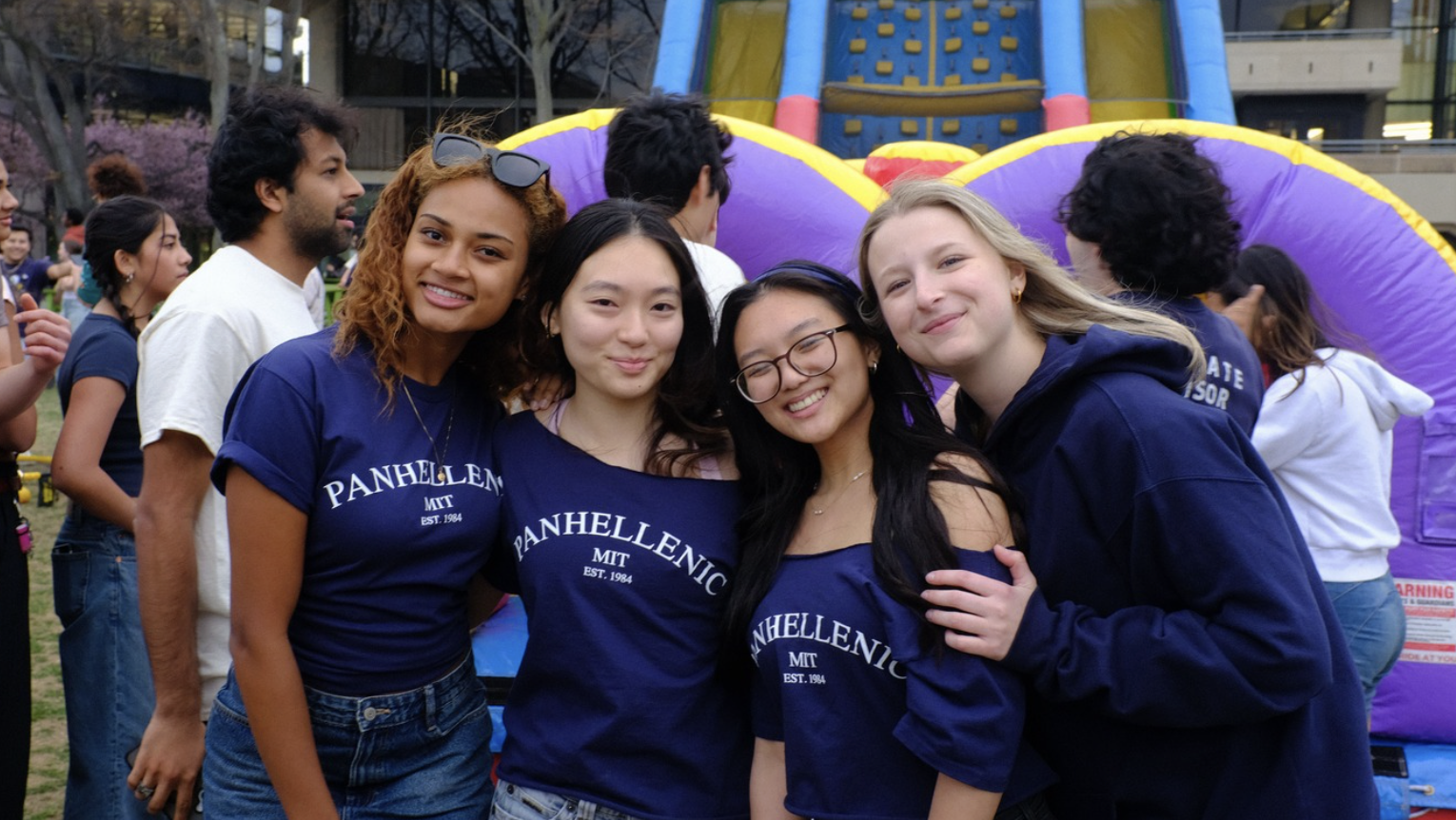
The MIT Panhellenic Council represents the largest women’s+ community on campus, serving the larger Greek community by advocating for Panhellenic spirit and cultivating the sorority experience by providing support and guidance to chapters and sponsoring the sorority recruitment process.
-
Vision
The MIT Panhellenic Council strives to promote a culture of diversity and inclusion, empowerment, and high achievement by supporting individual chapter goals, philanthropy, and collaboration amongst its seven organizations.

-
Values
The MIT Panhellenic Council unites MIT’s six organizations under the values of sisterhood, scholarship, service, leadership, integrity, and growth.
Inclusivity Statement
The MIT Panhellenic Association is dedicated to the advancement of womanhood. We affirm the worth and dignity of every member of our organizations and respect that our membership reflects a variety of perspectives and a wide range of lived experiences. It has been our practice to be inclusive of all individuals regardless of race, age, ethnicity, nationality, ability, sexual orientation, marital status, religious affiliation, and socioeconomic status. We celebrate the varied voices this policy has brought us and recognize the intrinsic value of diversity.
In order to stay true to these values and respect the fact that the National Panhellenic Conference and MIT do not and cannot govern the membership selection processes of individual national chapter organizations, we would like to provide clarification about the practices regarding the inclusion of individuals of diverse gender identities:
Women will always be considered; this is inclusive of cisgender women and transgender women.
Cisgender and transgender men are never considered eligible to join our community.
Resources are available for nonbinary, gender nonconforming, or agender individuals to learn more about their options for membership eligibility. Please email panhel-exec@mit.edu with question or view resources here.
No member is required to provide documentation regarding their gender. We welcome all as they self-identify. Additionally, all gender expressions (distinct from gender identity) of individuals extended membership are welcome in MIT Panhellenic.
Definitions
We demonstrate our commitment to the advancement of womanhood by offering the following definitions, ensuring that our interested members, current members, and lifelong members understand the language we use and hold us accountable to our progress.
Cisgender: a person whose sex designated at birth and gender identity align. An example of this is a person designated male at birth that identifies as a man.
Transgender: a person whose sex designated at birth and gender identity do not align. This may include men, women, and nonbinary people. An example of this is a person designated female at birth that identifies as a man.
Nonbinary (gender nonconforming, agender): An adjective describing a person who does not identify exclusively as a man or a woman. Non-binary people may identify as being both a man and a woman, somewhere in between, or as falling completely outside these categories. Non-binary can also be used as an umbrella term encompassing identities such as agender, bigender, genderqueer or gender-fluid.
Gender Identity: a person’s self-determined identity related to the concepts of man and woman, which may or may not align with either concept. Examples of gender identities include man, woman, nonbinary, and agender.
Gender Expression: the way in which a person expresses their gender identity, typically through their appearance, dress, and behavior. A person’s gender expression may be masculine, feminine, and/or androgynous.
Resources
The MIT Panhellenic Association is guided and aided by the following on-campus organizations and offices.
Please contact panhel-exec@mit.edu or any of these other resources if you, or a friend, need additional support.